St. Peter Catholic Church
  • Home
  • From The Pastor
  • Online Streaming
    • Mass Archives
  • Parish Info
    • Welcome
    • Mass & Reconciliation
    • Sacramental Information
    • Register With Parish
    • Parish Team
    • YOUTH PROTECTION
    • RESOURCES
    • Photo Gallery
  • Education
    • OCIA
    • Guardian Angel
    • Religious Education >
      • RE Registration
      • RE Online Payment
      • Sacrament Information
    • Vacation Bible School
    • Catholic Education
    • SCRIP
  • Ministry
    • Ministry Schedule
    • CAMPUS MINISTRY
    • YOUTH MINISTRY
    • Music Ministries
  • News
    • Parishioner News
    • USCCB
    • Weekly Bulletin
    • Weekly Calendar
    • Monthly Look
    • Upcoming Events
    • St Peter Columbarium
  • Stewardship
    • Online Giving
    • Opportunities
  • New Page

05/10/2026 Sunday in Easter

5/8/2026

0 Comments

 
Picture
​Beloved in Christ,
 
The Gospel reading this Sunday, from John 14:15-21, picks up a few verses from where we left off last week. Jesus spoke clearly of his enduring presence to his followers, both while he is with them and after he ascends to heaven, where he prepares a place for them so that where he is, they may always be.But meanwhile, as they live their day-to-day life, he promises to be present with them through the Holy Spirit, whom he will ask the Father to send to those who love and keep his commandment: ”And I will ask the Father, and he will give you another Advocate to be with you always, the Spirit of truth” (John 14:16).
 
The promise of the Holy Spirit to sincere believers and lovers of Jesus is the key to a living faith and church growth. When a Christian surrenders his or her heart completely to Jesus in an act of love through sincere confession of sin and commitment to the teachings of the Gospel, Jesus will send his Spirit upon them. As a result of the indwelling of the Holy Spirit, a Christian shares in the intimate life of the Father and the Son because the Holy Spirit is the love that unites them. The Holy Spirit is sent upon the Church as a corporate or universal body as well as on the individual for their sanctification and empowerment to witness boldly and fruitfully to the gospel of Christ. This is the case with early Christians and the Church. They received the Paraclete, their Advocate before God. Through the presence of the Holy Spirit and his gifts, those who love and follow Christ will do greater things than Jesus by proclaiming his gospel beyond Israel and into the Gentile world.
 
The witness of the early Christians in our first reading illustrates the promise Jesus made. Through Philip’s proclamation of Christ, the Samaritans accepted the word of God, and Peter and John prayed for them by laying hands, and they received the Holy Spirit (Acts 5: 17). By this event, we witness the power of the Holy Spirit in breaking new grounds, doing new things, doing the unimaginable- bringing about conversion to faith in Christ of the Samaritans, people known to be hostile to Jews and vice versa. When we allow the Holy Spirit to work through us, we can do new and incredible things for Christ and his church. When, through the power of the Holy Spirit, we make Jesus the Lord of our hearts, we are prepared to offer explanations to those who ask for the reason for the living hope they observe in us (1 Peter 3: 15). What shall we do? ( Acts 2:37). We must now seek to grow in our love for Jesus and pray with faith and devotion to him to send forth his spirit anew upon us, like on the day of Pentecost. Love and pray more; that is what we should do in response to this Sunday’s message.
 
We continue with the May devotion. Stay close to our Mother Mary, and pray the rosary daily. We must also keep in mind the upcoming great feast of the Ascension of our Lord; it is a good time to prepare for the Pentecost Novena.
 
To our ever-beloved mothers, I wish Happy Mother's Day!
 
In Jesus and Mary,
Fr. Alayode, OP

0 Comments

05/03/2026 Sunday in Easter

4/30/2026

0 Comments

 
Picture
​Beloved in Christ,
 
Jesus says to his disciples: “In my Father’s house are many rooms; if it were not so, would I have told you that I go to prepare a place for you?” (John 14:2). Prior to his ascension to heaven, Jesus taught his disciples of his divine identity, his heavenly destination, and his plan to have them follow in his path: “I will come again and take
you to myself, that where I am you may also.” He also adds, “and you know the way where I am going.” Thomas expresses our uncertainty about our ultimate end or destination, and how to get there. Jesus answered him: “I am the way, and the truth, and the life; no one comes to the Father, but by me” (John 14:6). The goal of Jesus’ teaching here is to assure his followers that they will be rewarded with eternal covenantal communion with the Father after a lifetime of loving God and their neighbor. We all must long for the presence of the Father in heaven, where Jesus has gone ahead of us, as we say in the Creed, to sit at the right side of the Father. All our life on earth must be devoted to knowing Jesus and longing to follow in his way to the Father’s house, where he has gone ahead to prepare a place for each and every believer.
 
Pope St. John Paul II imbibed and lived the faith in his lifelong longing for God's eternal presence. According to Vatican News, Pope John Paul II’s last words at his bedside indicate his knowledge of Jesus as the way to the Father. Pope John Paul II’s last words, spoken in Polish around 3:30 pm on April 2, 2005, on the vigil of Divine Mercy Sunday, were “Pozwolcie mi odejsc do domu Ojca (”Let me go to the house of the Father”). To get to the Father’s house, to experience the beatific vision on the other side of the world, we must come to know Jesus. Jesus says, “If you had known me, you would have known my Father also, henceforth you know him and have seen him” (John 14:7). Jesus and the Father are equal in essence, substance, and nature. Hence, to know Jesus is to know the Father since Jesus is the incarnate Word of the Father. Now, how do we know Jesus? Apparently, spending a long time with him is no guarantee, as we see with Thomas and the other disciples. To know Jesus is to have absolute faith in Him and do His works. We must be in union and communion with him to know and follow where he has already gone ahead of us.
 
So, the question arises: Do I know Jesus? Do I know the promise he made about coming to take those who believe, know him, and do his work to the Father’s house? Do we recognize our identity as a part of “the holy priesthood” called “to offer spiritual sacrifices acceptable to God through Jesus Christ”, a chosen people called “to announce God’s praise”? (1 Peter 2:5,9 ). What we must do is to revisit our followership and faith in Jesus. Are we totally submissive to him? Do we love Him with everything we have, with all our heart, mind, soul, and strength? It is clear from Jesus’ dialogue with Thomas that being a follower of Jesus does not necessarily mean one “knows” Jesus well enough to be assured of being on a sure path to truth and life. Jesus is the sole way to happiness and the presence of God. Do we know this to be true and live by our conviction? Let us review and renew our commitment to our baptismal promises, renouncing Satan and worldly allurements in order to fully commit to a deep daily longing for “the encounter with an event, a person, which gives life a new horizon and a decisive direction” (Pope Benedict XVI, Deus Caritas Est, 1). Having this encounter, described by Pope Benedict XVI, is what it means to be a Christian, a follower of the Way, the truth, and the Life.
 
We have come to yet another opportunity to strengthen our devotion to Mary, the Mother of Jesus, the Queen of Heaven, who intercedes for all her children, all who believe and follow Jesus closely. May is the Month of Mary. When our religious education students crown the statue of Mary this Sunday, they indicate to us Mary's special role as Queen of Heaven and Earth. Mary is the Queen Mother who intercedes on behalf of all who love and are devoted to her. The act of crowning Mary, dating back to a 13th-century custom, will hopefully inspire us to express our love for the Mother of Jesus more deeply by praying her Rosary and imitating her virtues. Most canonized saints are known for their devotion to Mary and praying the Rosary. Let us join in that procession of embracing the Blessed Virgin Mary as our mother, crowning her with the rosary's rose beads.

In Jesus and Mary,
Fr. Alayode, OP
 
0 Comments

04/19/2026 Sunday in Easter

4/16/2026

0 Comments

 
Picture
  Dearly Beloved,

"That very day, the first day of the week, two of Jesus' disciples were going to a village seven miles from Jerusalem called Emmaus..." (Lk 24: 13). Let's take some time on this "first day of the week," this third Sunday of Easter, to reflect on the importance and necessity of going to mass every Sunday (if inclement weather or poor health do not impede us). Catholics are expected to attend Mass on all Sundays and Holy Days of Obligation. Why so? What is so special about Sunday? Early Christians received wisdom on the centrality of this day of all days in the week as a day primarily devoted to sacred worship. Pope St. John Paul II wrote of Sunday in the following words: “It is Easter which returns week by week, celebrating Christ's victory over sin and death, the fulfilment in him of the first creation and the dawn of "the new creation" (cf. 2 Cor 5:17). It is the day which recalls in grateful adoration the world's first day and looks forward in active hope to "the last day", when Christ will come in glory (cf. Acts 1:11; 1 Th 4:13-17) and all things will be made new (cf. Rev 21:5)” (Dies Domini, 1).
 
One of the earliest writings of the Church on early Christian understanding and practice on
Sunday, "the first day of the week," is found in today's Office of Reading (Divine Office, the
official prayer of the Church), St. Justin Martyr's "First Apologia," in which he describes what Christians did on that day:
they assemble, they share the Word of Sacred Scriptures, and they partake in the Holy Eucharist. Here are words from St. Justin's "First Apologia": "We hold our common assembly on Sunday because it is the first day of the week, the day on which God put darkness and chaos to flight and created the world, and because on that same day our savior Jesus Christ rose from the dead."

Sunday is primarily the Lord's Day! It is not sports day (though we can play sports with family), it is not party day( though we can celebrate a party with family and friends), it is not a day to sleep all morning and watch TV (though we can indeed rest more and recreate with family by watching movies or sports on TV together); it is above all the day Christ is revealed sacramentally to the assemble of the faithful in the explanation of the Scriptures and the breaking of bread (see Lk 24:32,35). On the Jewish Sabbath, what did Jesus do? He often went to the temple to worship. As followers of Jesus, we should imitate his spirit by gathering in person on Sunday to glorify and praise God through the liturgies of the Word and the Eucharist.
 
Attending Mass on Sundays and Holy Days of Obligation maintains God's covenant with us and offers him praise and thanksgiving for saving us from sin and death. It is why every Sunday is a mini-Easter, a day of the joyful celebration of the Risen Christ. The Mass on Sunday is preeminently foreshadowing the eternal banquet in heaven that we all look forward
to. Therefore, it would be best if you looked forward to every Mass, especially on Sundays, as a foretaste of heaven, which
is the purpose and destiny of our earthly journey. Always prioritize going to Mass on “the Lord’s Day, the lord of days”
(Dies Domini 2). Imagine missing Mass on Sunday as the equivalent of missing a taste of heaven on earth.
 
Congratulations to our children who received Holy Communion for the first time on Saturday. I taught them about the importance of attending Mass every Sunday. I told them it is the most excellent source of joy on earth: a meeting with the Real and Living Jesus. I pray they act on my instructions with the help of their parents and godparents. With Pope St. John Paul II, I invite you “to rediscover with new intensity the meaning of Sunday: its ‘mystery’, its celebration, its significance for Christian and human life” (Dies Domini 3). See you next Sunday! And strive to invite someone to mass if you can.
 
In Christ's Joy,
Fr. Alayode, OP
 
0 Comments

04/12/2026 Divine Mercy Sunday

4/10/2026

0 Comments

 
Picture
​Beloved in Christ,
 
“My Lord and My God!” (Jn 20:28). The first time I heard those words of Thomas called Didymus was from the lips of my parents after consecration at Mass. As a young child at Mass with my parents, I would often hear them say with faith and gaze on the raised consecrated host, "My Lord and my God!" Since then, I have never failed to make this act of faith at the elevation of the Consecrated Host and Chalice at Mass. However, this act of faith by Thomas in the divinity of the Risen Christ flows from a beginning rooted in doubt and uncertainty; hence the term, "Doubting Thomas." Thomas wanted proof, or is it evidence, that Jesus has indeed risen. The Bible says that on the evening of the first day of the week, Jesus appeared to the apostles, who locked themselves up in a room out of fear of the Jews. He showed them his hands and side as proof that it was his resurrected, glorified body, and they believed with their eyes. Thomas was absent and would not believe the disciples' words unless he saw the marks of the nails in his hands, put his finger into the nail marks, and put his hand into his side; he would not believe (see Jn 20:19-25).
 
There is a lot of unbelief that attends to the revealed truth of faith in our time. Within and outside the Church are people who will not make an act of faith unless they see, touch, and verify. Some people consider the scientific method the only acceptable way of knowing. Many will not believe the doctrines of our faith, such as the Real Presence in the Sacred Host, unless they can verify the facts behind them; they need materialist proof. They exclude faith as a way of knowing when faith itself is involved, even in scientific methods. Facts do not exclude faith. Faith is always a way of knowing. We do not have to see, observe, and experiment to believe in the reality of a claim, especially the mystery of faith.
 
We believe and exercise faith in the revealed truth about the resurrection of Jesus from the dead without falling into the notion of blind faith. Our faith also has evidence to back it. We are even better off for believing without seeing. We believe based on trust in God's love for us. From Scripture and Christian living, we know that God is faithful to his promises and cannot deceive. We have to nourish our faith daily through prayer, meditation on the Scriptures, and action in faith.
 
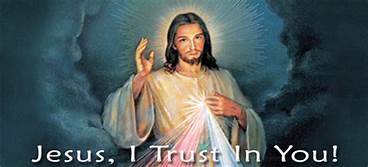
On this Divine Mercy Sunday, we are called to affirm our faith in the Divine Mercy that flows from the side of Jesus on the Cross and the wounds from his risen body. Today, we pray the Divine Mercy and perform the required acts of faith to receive a plenary indulgence, remitting all temporal punishments due for our sins. God has provided a fountain of mercy in the sacrament of reconciliation. Let us receive it frequently in faith.
 
We will conclude the Octave of Easter with the communal praying of the Divine Mercy chaplet at 2:30 pm here in our church. The Novena to Divine Mercy, begun on Good Friday, ends with the outpouring of God’s ocean of mercy into our souls. Let’s come in our numbers to partake of this superabundant grace of mercy.
 
Please note that the bowl of water on a decorated stand at the entrance to the church narthex is taken from the water blessed at the Easter vigil. Its purpose is to highlight the centrality of baptism in Eastertide and our Christian life.
 
In Christ’s Mercy,
 
Fr. Alayode, OP
 
0 Comments

04/05/2026 Easter Sunday

4/3/2026

0 Comments

 
Picture
 Beloved in Christ,

Jesus is alive! He was raised from the dead! We rejoice in the victory of the Risen Christ over sin and death. "This is the day the lord has made; let us rejoice and be glad" (Ps 118: 24). Early in the morning on the first day of the week, Mary of Magdala, and later Peter and John, in that order,  went into the tomb where Jesus was buried and found it empty. His body was not in the tomb (see John 20:1-9). The empty tomb signifies and tells the story of our justification- his resurrection redeems our lost lives due to sin. The disciples came to believe in the resurrection of Jesus when they found his tomb empty. Jesus has risen bodily from the tomb. Jesus rises from the dead, and so shall we rise with him! Alleluia!!

We should make a big deal out of this sacred event- the resurrection of Jesus. Jesus, who suffered, was crucified, died, and was buried on Good Friday, is now alive! St. Peter recalls his death and resurrection in his sermon in the Acts of the Apostles, "They put him to death by hanging him on a tree. This man God raised on the third day..." (10:40). The resurrection of Christ is a fantastic act by the mere fact that he who was put to death for our sin defied death and, in fulfillment of the prophets, is now alive to die no more. We, too, his followers, will live forever.

Jesus died, and he rose, and so what? What’s next? Jesus’ resurrection has consequences for all who die in Him, because now they will live in Him forever; death will never have the last word over them. The good news of Jesus' resurrection has additional consequences for all believers. Now that we are risen with him in baptism, we must seek him who is in heaven. "If then you were raised with Christ, seek what is above, where Christ is seated at the right hand of God" (Col 3:1). From now on, we must bear witness to the risen Christ. We are now witnesses to the risen Christ. We must continue to reflect on what the call to become witnesses of the resurrection of Christ means for us in the next fifty sacred days of the Easter season and beyond- into Pentecost.

But for now, on this Easter morning, let us offer "a joyful sacrifice of praise" to the Paschal Victim (sequence) because He is alive; death did not have the final say! Easter is, above all, a joyful season. According to St. Athanasius, "The fifty days from the Sunday of the Resurrection to Pentecost Sunday are celebrated in joy and exultation as one feast day, indeed as 'one Great Sunday.' "  For the next fifty days and into Pentecost, may Jesus always be alive in us as we strive daily to witness to the power of his resurrection by living our lives in Him and for Him.

Do keep the ongoing Novena to Divine Mercy in mind. We will conclude the Octave of Easter with a parish celebration of Divine Mercy Sunday devotion starting at 2:30 p.m. next week. Also, keep in mind that tomorrow, Monday within the Octave of Easter, is our parish's monthly Eucharistic adoration. Let’s come adore the Risen Lord in joyful songs of praise and thanksgiving.


The Lord is risen indeed! Shout Alleluia!

Happy Easter!

Fr. Alayode, OP
 
 
0 Comments

03/29/2026 Palm Sunday

3/26/2026

0 Comments

 
Picture
 Dearly Beloved,
 
"My Father, if it is possible, let this cup pass from me; yet, not as I will, but as you will" (Mt 26:39). A significant act and event in the life of Jesus Christ is his sacred passion. The Passion of the Christ, Mel Gibson's 2004 movie on the Passion of Christ, portrays how deep and intense Christ's act of love for the redemption of the world from sin and death was, illustrating the gore, the bloodletting, and the bodily pain associated with his humble submission to the Father's will. It is counterintuitive to imagine that God, who is love, would demand the free obedience of his beloved Son to pay such a high price for the sake of sinners. However, it is truly an act of love when Jesus became "obedient to the point of death, even death on a cross" (Phil 2:8) to save humanity from eternal doom. Jesus drank the chalice; he freely took upon himself the suffering that our sins triggered. 
 
Chris's passion is central to our salvation history, and the Church has dedicated an entire liturgical week to commemorate it. "Holy week is ordered to the commemoration of Christ's passion, beginning with his Messianic entrance into Jerusalem" (Universal Norm, 31). Our Lenten season reaches its crescendo during Holy Week, from Monday to Thursday inclusive. It climaxes in the Sacred Triduum when we remember and spiritually participate in the paschal mystery- suffering, death, and resurrection of Christ. 
 
Today, on Palm Sunday, we recall Christ's entrance into Jerusalem to fulfill his paschal mystery. In the procession, we spiritually entered the sacred moment marking the beginning of our redemption. Let us keep the spirit of passion alive in the days ahead. "What, really, do the liturgies of the triduum celebrate?" Nathan Mitchell raised this question in an essay titled "The Three Days of Pascha." Is it just about stepping into a historical moment and walking the way of the cross with Jesus? It is more than that. Mitchell provides an answer: "What the paschal triduum actually celebrates is mystery, not history; anamnesis, not mimesis.... They celebrate not once what happened to Jesus but what is not happening among us as a people called to conversion, gathered in faith, and gifted with the spirit of holiness."
 
May the spirit of Christ's passion take full possession of our hearts to do the Father's will and participate actively in the liturgies and services of the Holy Thursday of the Lord's Supper, Friday of the Passion of the Lord (Good Friday), and the solemn Holy Saturday. Please pray earnestly for our elect, Sophia, who enters the last week of a long preparation for the reception of the sacraments of initiation. We look forward to celebrating the triumph of the Risen Christ, but first, let's enter into the mystery of Christ's passion. The passion is the prayer; let's pray it.
 
In the passion of Christ,
Fr. Alayode, O.P.
 
0 Comments

03/22/2026 Sunday in Lent

3/19/2026

0 Comments

 
Picture
​Beloved in Christ,
 
Mary and Martha’s experience of grief at the death of their brother, Lazarus, is a universal one. Jesus, who loved Lazarus and his sisters, similarly expressed the same sorrow when he met the reality of Lazarus’ death and how it threw his sisters into emotional distress. In truth and deed, death stuns and stinks. Jesus wept at the grave of Lazarus because he experienced the sting of death and it must have dawned on him at this close connection to the death of a loved one that this was not God’s original plan for humanity at creation. Sin brought about death and graves. Jesus, however, did not stop at sharing in human grief over death. Jesus wept, but he followed his display of sorrow with the restoration of life to Lazarus. Jesus says to Mary, “I am the resurrection and the life, says the Lord; whoever believes in me, even if he dies, will never die” (Jn 11:25-26).
 
Jesus defeats sin and death through the life-giving spirit of God. Jesus is the author of life. Turning to his Father in prayer, Jesus called Lazarus, who had been dead for four days, back to life: “Lazarus, come out!” (Jn 11: 43). In Jesus is the ultimate fulfilment of Ezekiel’s prophecy to the Israelites in exile: “O my people, I will open your graves and have you rise from them” (Ez 37:12). Jesus brings to fulfilment the promise of God to restore life to the dead through his spirit who gives life: “I will put my spirit in you that you may live” (Ez 37:14). The spirit that death snuffs out at death is returned by Jesus who not only declared himself as the resurrection and life but indeed was raised from the dead on the third day. All who believe and live through his spirit will not be defeated by death because Jesus made a promise to bring them to life at the resurrection. St. Paul affirms Jesus’ promise about spirit and life in the following words: “If the Spirit of the one who raised Jesus from the dead dwells in you, the one who raised Christ from the dead will give life to your mortal bodies also, through his Spirit that dwells in you” (Rom 8:11).
 
The necessary condition for placing hope in the resurrection of the dead is our faith in Jesus. In his words
to Martha, Jesus declares, “Everyone who lives and believes in me will never die. Do you believe this?”
(Jn 11:26). As believers in Jesus, as people who live in and by the spirit of Christ, we must never allow the stench of death to suffocate us. As Christians, we are hopeful of life after death because Jesus assures us. Beyond Lazarus' death lies the hope of the resurrection of glorified bodies of those who believed in Jesus and lived in his spirit. May God keep us striving against all the sufferings of life and walking confidently through the dark valley of life.
 
Next Sunday is Palm Sunday. Let us be prepared to walk with Jesus into Jerusalem to fulfil his mission
of dying to bring us life. Let our hearts be prepared to encounter the spirit of Christ in the liturgy of the
Holy Week.
 
In Christ,
Fr. Alayode, OP
 
0 Comments

03/15/2026 Fourth Sunday in Lent

3/12/2026

0 Comments

 
Picture
 Beloved in Christ,
 Happy Laetare Sunday!
 We have come into the second half of our annual Lenten season.
The church offers us a little respite from our penitential discipline,
and filled with deeper devotion and eager faith,  we hasten toward the solemn celebration of the Easter joy. In the spirit of anticipation, we can have some flowers to decorate the altar, play more instruments to enhance our liturgical worship, and have the celebrant wear rose-colored vestments. Using the words of Prophet
Isaiah, the church bids us rejoice: “Be joyful, all who were in mourning.”
 
In our joyfulness, however, we do not slacken in our Lenten journey of self-discovery and conversion.
God is still at work, leading us closer to himself. This Sunday, the Gospel is about the man born blind.
The healing of this man's blindness is not only a case of physical healing; it also points to fulfillment in
the prophets that the Son of man will come to heal the blind. The blindness has a mystical or spiritual dimension. Jesus is the one Prophet Isaiah was referring to in his work (see Is. 29:9, 18; 35:5; 42:7, 16, 18-19; 59:10, etc.). Jesus came to heal our spiritual blindness. Like the scribes and Pharisees who opposed Jesus, we too may be suffering from spiritual blindness of pride and other sinful dispositions from a hardened heart. Jesus wants to heal us of any form of spiritual blindness so that we begin to see, recognize, and bear witness to him as the blind man in this Sunday’s gospel. Jesus wants to lead us from darkness into the radiance of the faith through the sacraments. We were once in darkness, but now we must be light for the world.
 
We celebrate Sophia Hoglund McGuirk’s second scrutiny today. Our Elect this year is being led from spiritual blindness to sight as she prepares to receive the sacrament of initiation during the Easter season. We must continue to pray for her as we pray for one another to experience healing from our spiritual blindness, so that, coming to a deep faith in Jesus, we may courageously testify to him publicly by our deeds and words.
 
Monday, March 16, a day before St. Patrick’s feast, is our parish Penance service. Please consider it an opportunity to receive healing for spiritual blindness. Nothing blinds the soul more than unconfessed sins. There will be six priests available to hear confessions. Let us make it our Lenten duty to go to confession, if needed, before Easter. Tomorrow night, from 7 pm, is our opportunity to do so. On Thursday, we shall gather once again here to celebrate the solemnity of St. Joseph, spouse of the Blessed Virgin Mary; we shall sing the Gloria that we have fasted from since Ash Wednesday! Come, join the celebration.
 
In Christ our Light,
 
Fr. Alayode, OP
 
0 Comments

03/08/2026 Third Sunday in Lent

3/5/2026

0 Comments

 
Picture
​Beloved in Christ,
 
“A woman of Samaria came to draw water. Jesus said to her, ' Give me a drink” (John 4:7). This verse within the pericope of this Sunday’s gospel captures a fundamental aspect of our spiritual life- the desire for union of love with Christ. We are made with a need for water, not just natural water but spiritual water that sustains our need for eternal life and union with Jesus. The spiritual water here symbolizes the Holy Spirit, love, and faith. In our journey to faith, we will be tested by dryness, emptiness, neediness, and a general human lack. In this state of spiritual dryness, we, like the people of Israel, “In their thirst for water” (Ex 17:3), may find ourselves questioning God. In the Exodus account, God instructed Moses to strike the rock at Horeb and water “flow from it for the people to drink” (Ex 17:6). But the water Moses provided was not satisfying; it was not the living water that sustains continually without end. Only Christ, the new Moses, the Rock of our salvation, can provide that life-giving water of faith and love.
 
It is to Jesus we must go to drink of the living water of grace and faith. The thirst for true love and faith represented in the Samaritan woman (who has married five times to false lovers) will be satisfied only by Jesus when we approach him at the well. Like the Samaritan woman, we have at different times in our lives looked for the thirst quenching water in the wrong places of the secular world, but now we know it is in our coming to Christ that “we have gained access by faith to this grace in which we stand” (Rom 5:2). The love we have and in which we live now is because we have asked and have received from Christ. Paul affirms this when he writes, “the love of God has been poured out into our hearts through the Holy Spirit who has been given to us” (Rom 5:5). It is Christ who generously poured his love and faith into our hearts, that is hearts that have softened, not the hardened hearts of the Israelites at Meriba and Massa (Ps. 95:8).
 
We must never stop going to the well to meet Jesus, the Rock, who provides the living water that satisfies, to ask him to assuage our thirst for him. The words of the Samaritan must come forth frequently from our lips: “Give me living water, that I may never thirst again” (Jn 4:15). The question is: do we accept our need for Christ’s living water to nourish and sustain our spiritual life? Do we understand that our faith and relationship with Jesus can only grow profoundly when we ask Jesus for his gift of living water? “If you knew the gift of God and who is saying to you, ‘Give me a drink,’ you would have asked him and he would have given you living water” (John 4:10). In this Lenten season, a time of grace, let us approach Jesus, the Rock of our salvation, and ask of him to fill our repentant heart of flesh with the gift of the Holy Spirit, the Living water. Let us ask him to strengthen our faith in him to the point of sharing that gift of faith with others, so that they, too, like the Samaritans, may come to believe and know that Jesus is “truly the savior of the world” (John 4: 42).
 
As we continue to open our hearts to Jesus during this season of Lent, may our hearts be converted to thirst for Jesus, who also thirsts for our faith (see John 19:28), and may he kindle in us the fire of divine love (from the Third Sunday of Lent preface). In conclusion, I invite you to praise and thanksgiving using the words of the Psalmist: “Come let us sing joyfully to the Lord; let us acclaim the Rock of our salvation (Ps 95:1). Let's approach the well that is Jesus and draw water. The Lenten season is a profitable time to pursue this noble and holy act devoutly.
 
In Christ, the Rock,
Fr. Alayode, OP
 
0 Comments

03/01/2026 Second Sunday in Lent

2/26/2026

0 Comments

 
Picture
​Beloved in Christ,
 
"This is my beloved Son, listen to him" (Mt 17: 5). What does it mean and cost to listen to Jesus, God's beloved Son? To listen to Jesus is to deny oneself, take up the cross, and follow him (See Mk 9:34). Abram, our father in faith, trusted God when asked to leave his home for the unknown. God made him promises without any concrete sign of fulfilment, but “Abram went as the LORD directed him” (Gen 12:4). We must listen to God and obey his commandments even if it leads to affliction and suffering. God never abandons us in our suffering; he provides us strength and hope. God continues to speak to us his words of conversion and faith. Lent is a season we must commit to listening to the word of God as Abram did. Pope Leo’s 2026 message of Lent, “Listening and Fasting,” calls us to listen to the word of God: “The willingness to listen is the first way to demonstrate our desire to enter into relationship with someone,” Pope Leo says.
 
The story of the transfiguration of Jesus on the holy Mt. Tabor is God's remedy to the Christian experience of suffering. The revelation of divine glory in the transfiguration of Jesus will aid the apostles when they see Jesus go through his passion and when they, too, encounter suffering in the world, as they listen to and obey Jesus' teachings. This event on the mountain points to a central truth of our Christian faith- that the cross is the key to heavenly glory. The cross eventually leads to the resurrection. Without the cross, there is no resurrection. We should never forget that our sufferings and afflictions are not the end of the story. When we continue to listen to and obey God's commandments, we should always trust that God will not abandon us, even if we feel that way in real-time. God will always point to the transfiguration of his Son as the definite end of our prayerful walk with Jesus, the denial of self, picking up our cross, and following him. The transfiguration is a source of hope in the midst of the trials we face as we live our faith.
 
One of the most instructive pious devotions in Lent, which captures the spirit of Jesus' passion, is the Stations of the Cross. The Via Crucis or Via Dolorosa, the way of the cross or way of sorrows/suffering, is an effective and impactful way of contemplating the suffering of Christ and a way of drawing inspiration and strength to endure our suffering as we strive to live our lives in obedience to the Gospel of Christ.
 
I strongly encourage everyone to make it a priority during Lent to attend the parish's Stations of the Cross every Friday at 7 p.m., after we finish our Lenten fish fry dinner. Jesus invites us to pick up our cross and follow him; let us listen to him!
 
In Christ,
 
Fr. Alayode, OP
 
0 Comments

02/22/2026 First Sunday in Lent

2/19/2026

0 Comments

 
Picture
​Beloved in Christ,
 
We come to the First Sunday of Lent after beginning our union with Jesus in his forty days in the desert on Ash Wednesday. As the Catechism of the Catholic Church says, "By the solemn forty days of Lent the Church unites herself each year to the mystery of Jesus in the desert" (540). In Jesus' temptation in the desert (Matthew 4:1-11), the Bible reveals how the Son of God comes to reverse or recapitulate the fall of Adam and Eve in Genesis 3:1-7. Jesus, God-Man, who is like us in all things but sin (Heb. 4:15) succeeds where the first Adam fails. Jesus is not only the new Moses but the New Adam who conquers the "triple concupiscence" of the lust of the flesh, the lust of the eyes, and the pride of life (Cf. 1 Jn 2:16) which the first Adam fell to.
 
How, like Jesus, can we conquer these threefold foundational temptations? Jesus shows us how, in our reading from Matthew 6 on Ash Wednesday, in the three pillars of Lent- almsgiving, prayer, and fasting. These spiritual disciplines are the tools of God's grace to help us in spiritual battle against sin; they are our weapons for self-mastery. When we fast, whether from food or social media, we are renouncing the dominance of pleasure over us; when we give alms, we detach ourselves from possession by earthly goods; and when we pray, we humble ourselves to the Lordship of God.
 
Do you want to grow in holiness and grace this Lent? Do you want to walk closely with Jesus? Do you want to overcome the lures of the tempter, the Serpent? Lent provides a good opportunity to walk with Jesus, to be with him in the desert. In the desert of silence and self-examination, we are alone with our very selves, naked before God, in confrontation with ourselves. In the desert with Jesus, we come to recognize the devil's lies, which distort truth, make sin plausible, and lead us down a false path in moments of weakness. We gain grace from the example of Jesus. Jesus has led the way; he has shown us how to win spiritual battles. All we need to do is go into the desert and allow Jesus to lead us. 
 
We have opportunities, especially during Lent, to unite ourselves as a community with Jesus by attending Mass and adoration, going to confession, praying the Stations of the Cross, and praying the Rosary as a community. Please consider giving more of yourself to Jesus through the discipline of Lent. Fast, give Alms, and pray more than you did before Lent.
 
Have a Happy Lent!
 
Fr. Alayode, OP
 
0 Comments

02/15/2026

2/12/2026

0 Comments

 
Picture
​Beloved in Christ,
 
"Before man are life and death, good and evil, whichever he chooses shall be given him" (Sirach 15: 17). Making choices is integral to human end, temporal and eternal. The human person, made in the image and likeness of God, is equipped with intellect and will to decide the end they desire. Each choice we make carries consequences. In making choices, we have immediate and eternal goals. Our choices are moral in nature and purpose. God created us with the capacity to make good choices that lead to eternal life, but God also gives us the freedom to choose either the path to life and good or the contrary path. God has placed a huge responsibility on us. And we make our choices about what and where we want to be time and time again throughout our lifetimes.
 
Lent is a liturgical time that the Church offers us to make those choices. In a matter of days, we will begin Lent with the imposition of ashes on our foreheads, indicating our mortality and the choices we have to walk or not walk the path of the cross that leads to a good and holy life. Lent. We have been here before. We have gone through the path of the liturgical circle over and over. If we look back, we can determine whether we made good, life-enhancing choices. Did we? Or, did we discover that we did not take advantage of the sacred season, with all the opportunities it provides for the good of our souls? Do we find ourselves just going through the motions, making little or no sacrifices that engender growth in good and towards life?
 
Making choices can be cruel. What do I mean? So often, we have to decide between the pleasure or comfort we are accustomed to and a new, difficult path that the Spirit of God will reveal to us. The old, familiar path, even when it hasn't drawn us deeper into the moral good, is always difficult to let go of. We always have the opportunity, especially during the penitential seasons like Lent or Advent, to re-route our path. That is the choice we must make. It can be painful, but we are capable of making that choice because God's grace is sufficient for us. What are the good and life-giving choices we want to make during this holy season of Lent? How can we make this a transformative Lent and avoid the same old routine that has not brought growth to our spiritual life? 
 
We must think about this year's Lent differently. We must remember that we have a God-given potential to choose the good and life. We must be willing to do the hard work of surrendering all to the Holy Spirit, who molds and renews us. The sacrifices and penances the season of Lent offers us abound. We begin with abstinence and fasting on Ash Wednesday. We have a choice to make: either make a big deal of it or fall into our old routine of doing nothing significant to indicate our desire for encounter or intimacy with God. Will the ashes remind us of our mortality and the need to enter into the narrow road that leads to eternal life? Are we going to strive to grow in virtue? Are we going to pray and fast more? Are we going to make a good confession? Are we going to be a moral light and salt in the world? Are we ready to choose to see the Gospel truth and live by its spirit or decide to stick to our old, sometimes unexamined ways, not in conformity with God's will?
 
Come this Ash Wednesday, let us choose to enter deeply into the spiritual warfare to choose moral good and eternal life by joining Jesus in the desert. Let's commit as much as we can, choosing life and good over death and evil. God promises to give us what we choose, what we seek, what we will, with the help of his grace. What is your choice going to be? life or death, good or evil? You are the one to make that choice. I get to make my choice as well.
 
Have a spiritually enlightening Lent.
 
In Christ's love,
Fr. Alayode, OP
 
0 Comments

02/08/2026

2/6/2026

0 Comments

 
Picture
Beloved in Christ, 
 
In his sermon on the mountain, spanning chapters five to eight of the Gospel according to Matthew, Jesus clearly spelled out the vocation and mission of the disciple. Speaking metaphorically and symbolically, Jesus demands that his followers put the spirit of the beatitudes into practice; good deeds and actions must follow the practice of virtues and faith. He says to his disciples, "You are the salt of the earth" and "the light of the world." Faith isn't just spiritual or private; it has public implications. Loving God includes actively working for justice in the world. Faith demands recognition of the dignity of every human person, as Isaiah writes in chapter fifty-eight, our first reading: "Share your bread with the hungry, shelter the oppressed and the homeless; clothe the naked when you see them, and do not turn your back on your own" (58:7-8). Prophet Isaiah adds, "if you bestow your bread on the hungry and satisfy the afflicted; then light shall rise for you in the darkness, and the gloom shall become for you like midday" (58:10).
 
What does it mean to be the salt of the earth and the light of the world? References to these two metaphors, which indicate how Christians and the Church should be perceived in the world, abound in the Sacred Scriptures. His Jewish audience understands the central role of salt in their culture, economy, and sacred rituals. Salt is a preservative. It brings out flavor in food. Salt has qualities of permanence, lastingness, and necessity for life, and it also brings other benefits. Salt translates to keeping the Gospel message received from Jesus permanent and unaltered, making the message of Christ a force for good and transformation in the world. The Christian message must bring about spiritual and corporal benefits, such as forgiveness of sin, eternal life, and care for the good of man and the universe.
 
In the same manner, the Christian's actions and deeds must shed light on a dark world. The life of the Christian must speak truth to the world. Just as light cannot serve its purpose by being placed under a bushel basket, likewise, the Christian life, with all its blessings and graces, cannot be kept private. It must be seen in action and in its practice of social justice, bringing light upon the world and ridding it of all kinds of evil towards fellow human beings, friends and enemies, family and strangers alike. The Church must be set on the lampstand to give light to the world. Whenever and wherever corporal works of mercy and the Church's social teachings, rooted in the dignity of every human person, are practiced, we become light that shines through the darkness (see Ps. 112). 
 
As the salt of the earth, we must not lose our taste. As the light of the world, we can't afford to hide ourselves. We must live out our Christian faith without any compromise or fear of persecution. We must allow the Word of God and the Sacraments we receive to transform us into a force for human and social good. When we translate our faith into action in the world, bringing about the honor and improvement of all human beings, family and foes alike, friends and strangers alike, only "Then you shall call, and the Lord will answer, you shall cry for help, and he will say: Here I am!"
 
Today is World Marriage Day. As we do every Sunday, we celebrate married couples who continue to live out their vows through the grace of God and personal discipline. We pray for all married couples and those preparing for marriage. Today is also World Day of Prayer and Awareness against Human Trafficking. This scourge is real and alive in your country and county. We seek the intercession of St. Josephine Bakhita for an end to this menace. On Wednesday, the Church will celebrate World Day of the Sick. I will be praying for the sick at the daily mass at 8 am. Send your special intentions to me and, seeking the intercession of Our Lady of Lourdes, I will pray to the Lord for spiritual and physical healings.
 
One more piece of information. It is ten days to Lent. Let's begin to think about ways we want to draw closer to the Lord.  Next Sunday, during our Sunday assembly, we get to sing alleluia during the liturgy for the last time before Lent. Let's come to mass ready to sing multiple Alleluias before we start fasting from it in the spirit of sober reflection and sorrows for our sins.
 
In His Joy,
Fr. Alayode, OP
 
0 Comments

02/01/2026

1/29/2026

0 Comments

 
Picture
​Beloved brothers and sisters,
 
"When he saw the crowds, he went up the mountain...He began to teach them..." (Matthew 5:1). There is something to say about the designation of the church building on 1840 Marshall Dr/ 904 Mill Rd as a "new" church in comparison to the Historical Church as the "old" church. From the beginning of my time here, I have always contested the original nomenclature. I prefer to call the "new" church "the church on the Hill." I think my preference for that terminology is connected to the connotation of "mountain" in the Bible. A mountain is a place of divine revelation.  Moses encountered God and received the Ten Commandments on Mt. Sinai. Jesus, the new and more outstanding Moses, also goes to the mountain to talk to God and to teach new commandments.  In Matthew 5-7, Jesus went up the mountain, his disciples came up to him there, and he taught them about the blessings of the Kingdom.
 
Our parish church of St. Peter, the church on the hill (or symbolically, mountain), is the sacred place we come to encounter Jesus, who feeds us on his word and body. In our church, like on the mount of the Beatitudes, Jesus still teaches us about who He is and who He expects us to be. So he speaks to us this Sunday on the Beatitudes, meaning the blessed or the happy. If we pay attention, we will discover that Jesus is telling us how fortunate we are to be who and where we are. He is telling us we are his disciples, and he is our Lord. He also tells us the characteristics and attitudes expected of his followers. What should be our attitude to life and people?
 
As people who are in a good place in life and are blessed, our values should upend those accepted by the world. The attitude of a believer, no matter what circumstances they find themselves in the world, should be that of hope in the joy of the kingdom of heaven. Therefore, we should be meek, poor in spirit, peacemakers, righteous in our conduct, merciful, enduring, longsuffering, and so forth. Those values should always characterize us, no matter our situation.
 
The next time you drive up to the "church on the hill," or any Catholic church for that matter, remember that you are going to Jesus, who will teach you the right attitude to life. Jesus always teaches through the readings, especially in the Gospel and the homily. So listen attentively to what Jesus will teach you about the quality he expects of his followers in the world. For example, are you being called this Sunday to wear the attitude of humility, peacemaker, or mercy?
 
NB: The  Feast of the Presentation of the Lord on Monday will also be observed as World Day for Consecrated Life. Therefore, please endeavor to attend mass if you can. Mass will honor and offer an opportunity to pray for those who have chosen to follow Christ through the practice of the evangelical counsels. I fit into that category; I'm a religious order priest. Also, on Tuesday, on the feast of St. Blaise, I will give the blessing of throats after the 8:00 am mass in the historic church.
 
In His Joy,
 
Fr. Bernard, OP
 
0 Comments

01/25/2026 Word of God Sunday

1/22/2026

0 Comments

 
Picture
​Beloved in Christ,
 
Jesus is the central character of the Bible. On this Sunday, declared by Pope Francis in his motu proprio of 30 September, 2019, Aperuit illis as the Sunday of the Word of God, the church calls us to devote attention precisely to the Sacred Scripture as a source of knowledge about Jesus, the lover and saviour of our souls. The entire Holy Bible, the Old and the New Testaments, in essence, reveals to us the God who loves and saves us through the incarnation of his Son, Jesus Christ, the great light who preaches and invites us into the kingdom of heaven (Mt 4:17).
 
To help us celebrate, disseminate, and study the Word of God, as Pope Francis teaches in his apostolic letter, I will share with you excerpts from one of my favourite study bibles, the Didache Bible. What follows answers the questions: what is the Bible, what constitutes it, and why we should read it?
The Sacred Scripture is the Word of God addressed to humanity. Though God is the principal author, in composing the Sacred books, "God chose men and while employed by Him they made use of their powers and abilities, so that with Him acting in them and through them, they as true authors, consigned to writing everything and only those things which He wanted" (in Introduction, Didache Bible). This inspired library of books "forms a sacred deposit, which cannot be changed- the 'canon' of Scripture- and includes forty-six books in the Old Testament and twenty-seven in the New Testament." The Catholic Bible, therefore, is made up of seventy-three (73) books.
 
We should read from these inspired books of the Bible daily. Why? "The Bible is a unique book, unlike any other. Through its pages God meets his children with great love and speaks with them (DV 21), and expresses in human language the ultimate truths of his being. Sacred Scripture teaches us that man was created 'in the image of God' (Gen 1: 27), with the capacity to know and love his Creator, and it offers us the way to achieve happiness on earth and in Heaven. 'In Sacred Scripture, the Church constantly finds her nourishment and her strength, for she welcomes it not as a human word, 'but as what it really is, the word of God.' The Bible is a priceless treasure in which we always find light and a guide for our earthly pilgrimage" (Introduction, The Didache Bible, xiv).
 
Own a Catholic Bible. Read and pray (lectio divina) the Bible daily. Join others in studying the Bible. Love and live the Bible daily. The Bible is the Word of God addressed to YOU! In it, God makes His everlasting saving love known to you.
 
In His Joy,
 
Fr. Alayode, OP
 
0 Comments
<<Previous

    Archives

    May 2026
    April 2026
    March 2026
    February 2026
    January 2026
    December 2025
    November 2025
    October 2025
    September 2025
    August 2025
    July 2025
    June 2025
    May 2025
    April 2025
    March 2025
    February 2025
    January 2025
    December 2024
    November 2024
    October 2024
    September 2024
    August 2024
    July 2024
    June 2024
    May 2024
    April 2024
    March 2024
    February 2024
    January 2024
    December 2023
    November 2023
    October 2023
    September 2023
    August 2023
    July 2023
    June 2023
    May 2023
    April 2023
    March 2023
    February 2023
    January 2023
    December 2022
    November 2022
    October 2022
    September 2022
    August 2022
    July 2022
    June 2022
    May 2022
    April 2022
    March 2022
    February 2022
    January 2022
    December 2021
    November 2021
    October 2021
    September 2021
    August 2021
    July 2021
    June 2021
    May 2021
    April 2021
    March 2021
    February 2021
    January 2021
    December 2020
    November 2020
    October 2020
    September 2020
    August 2020
    July 2020
    June 2020
    May 2020
    April 2020
    March 2020
    February 2020
    January 2020
    December 2019
    November 2019
    October 2019
    September 2019
    August 2019

    Categories

    All

    RSS Feed

Parish Office Hours

Monday - Thursday

9:00am - 4:00pm

Fridays: Closed


Address

Mailing Address:  
1840 Marshall Drive
Elizabethtown, PA 17
022

GPS Address:
904 Mill Road
Elizabethtown, PA 17022

Contact Us

Phone: 717-367-1255
Fax: 717-367-1270

Email: [email protected]


© St. Peter Catholic Church. 2019. All Rights Reserved.
  • Home
  • From The Pastor
  • Online Streaming
    • Mass Archives
  • Parish Info
    • Welcome
    • Mass & Reconciliation
    • Sacramental Information
    • Register With Parish
    • Parish Team
    • YOUTH PROTECTION
    • RESOURCES
    • Photo Gallery
  • Education
    • OCIA
    • Guardian Angel
    • Religious Education >
      • RE Registration
      • RE Online Payment
      • Sacrament Information
    • Vacation Bible School
    • Catholic Education
    • SCRIP
  • Ministry
    • Ministry Schedule
    • CAMPUS MINISTRY
    • YOUTH MINISTRY
    • Music Ministries
  • News
    • Parishioner News
    • USCCB
    • Weekly Bulletin
    • Weekly Calendar
    • Monthly Look
    • Upcoming Events
    • St Peter Columbarium
  • Stewardship
    • Online Giving
    • Opportunities
  • New Page